Key Takeaways
- What you eat in the evening can directly affect how well you sleep.
- Foods high in sugar, fat, caffeine, or spice may cause restlessness, indigestion, or disrupted sleep cycles.
- Alcohol may make you drowsy at first but interferes with deep, restorative sleep.
- Simple swaps like fruit, nuts, or herbal teas can improve rest quality.
Why Food Affects Sleep
Good sleep is one of the foundations of health, but many people struggle to get enough rest. While stress and lifestyle play big roles, diet is another factor often overlooked.
The foods you eat, especially close to bedtime, can either promote calmness or disrupt your natural sleep cycles. Some foods make it harder to fall asleep, while others interrupt deep sleep, leaving you groggy the next morning.
Here are seven common foods that may be silently stealing your sleep.
1. Caffeine-Containing Foods
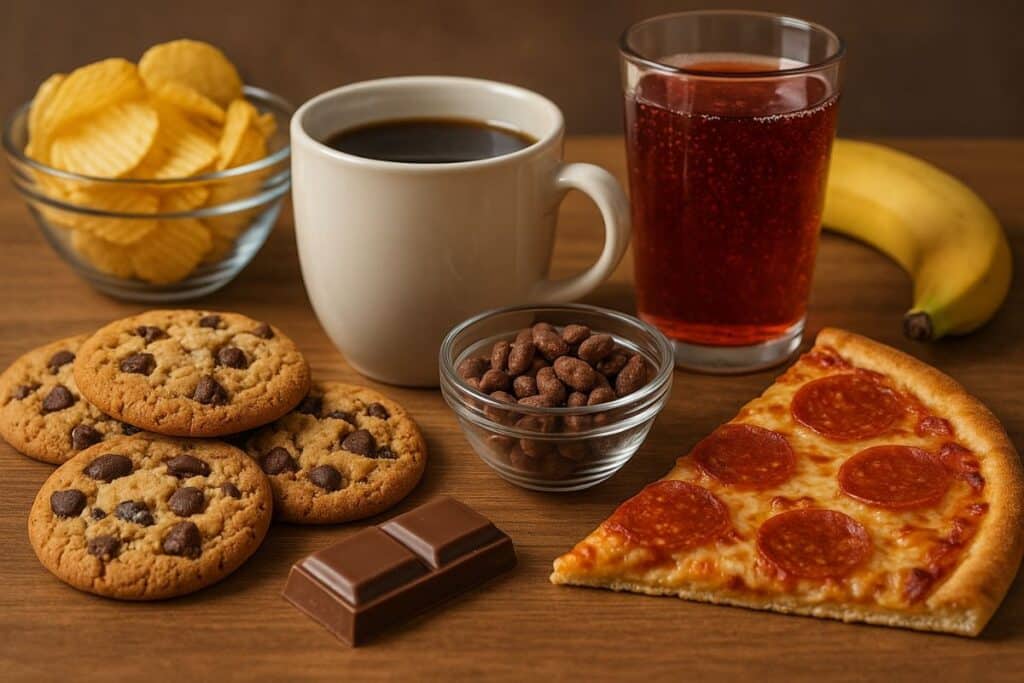
When most people think of caffeine, they think of coffee. But caffeine can also sneak into chocolate, coffee-flavored desserts, and even some teas.
Caffeine is a stimulant that blocks adenosine, the chemical in the brain that promotes sleepiness. Eating chocolate or other caffeinated foods in the evening can keep you awake longer and reduce time spent in deep sleep.
Better alternative: If you crave something sweet at night, try a small serving of fruit or a caffeine-free herbal tea with honey.
2. Spicy Foods
Spicy dishes may taste great, but eating them late at night can backfire. Chili peppers and hot sauces contain capsaicin, which raises body temperature and may interfere with the natural cooling process needed for sleep.
Spicy foods can also trigger indigestion or heartburn, making it harder to fall asleep comfortably.
Better alternative: Opt for lighter, milder flavors in the evening, and save the spicy meals for earlier in the day.
3. Alcohol
Alcohol is tricky because it often makes you feel drowsy at first. Many people believe a glass of wine before bed helps them fall asleep faster.
The problem is that alcohol disrupts REM sleep, the stage where memory consolidation and mental restoration occur. Even small amounts can lead to fragmented, lower-quality sleep, leaving you less refreshed in the morning.
Better alternative: Try chamomile tea, warm milk, or tart cherry juice — all of which may support better sleep.
4. High-Sugar Snacks
Cookies, candy, and other sugary treats may satisfy late-night cravings but can sabotage your rest.
Sugar causes a rapid spike in blood sugar, followed by a crash that may trigger nighttime awakenings or restlessness. Eating too much sugar close to bedtime can also increase cortisol, the stress hormone, which interferes with sleep.
Better alternative: Reach for naturally sweet foods like a banana or apple slices with almond butter.
5. Fried or Fatty Foods
Greasy foods like pizza, burgers, and fried chicken can weigh heavily on your stomach. Because fatty foods take longer to digest, your body stays busy breaking them down when it should be resting.
This can lead to indigestion, acid reflux, or simply a feeling of heaviness that prevents deep sleep.
Better alternative: Choose lighter evening meals with lean proteins, vegetables, and whole grains.
6. Aged Cheeses and Cured Meats
Foods like salami, pepperoni, and aged cheeses contain tyramine, a compound that stimulates the release of norepinephrine, a brain chemical that promotes alertness.
This stimulation can keep the brain active when it should be winding down, making it harder to fall asleep.
Better alternative: Try snacks like whole-grain toast with nut butter or plain yogurt with fruit.
7. Heavy Protein Meals Close to Bedtime
Protein is important for health, but eating a large, protein-heavy meal too close to bedtime can make sleep harder.
Protein takes more effort to digest compared to carbs, which can keep your digestive system active and delay the body’s natural transition into rest mode.
Better alternative: If you need a late-night snack, choose something lighter, like oatmeal, which may also support melatonin production.
How These Foods Disrupt Sleep
Although each of these foods works differently, they share common effects that interfere with rest:
- Stimulants (like caffeine and tyramine) keep the brain alert.
- Heavy digestion (fatty or protein-rich foods) keeps the body busy when it should be resting.
- Blood sugar spikes (sugar and refined carbs) trigger crashes and nighttime awakenings.
- Alcohol reduces restorative REM sleep.
- Spicy foods raise body temperature and cause indigestion.
Over time, these disruptions add up, leading to chronic tiredness, irritability, and reduced focus.
Better Evening Snacks for Sleep
The good news is that some foods actually promote better rest.
Sleep-Friendly Alternatives:
- Bananas rich in potassium and magnesium, which relax muscles.
- Almonds or walnuts contain natural melatonin.
- Oatmeal provides complex carbs that help with serotonin production.
- Chamomile tea calming properties that may promote drowsiness.
- Warm milk a traditional sleep aid that may help some people relax.
Choosing these snacks in the evening can help you fall asleep faster and stay asleep longer.
Bottom Line
Sleep quality isn’t just about how long you rest, it’s also about what you eat before bed. Caffeine, spicy foods, alcohol, sugar, fatty meals, aged cheeses, and heavy proteins can all quietly sabotage your sleep.
By swapping these foods for sleep-friendly alternatives, you can improve your chances of getting deeper, more restorative rest.
Better sleep starts with better evening choices and even small changes can make a big difference in how refreshed you feel each morning.
Up next: 11 Bedtime Snacks to Help You Sleep Better Through the Night