
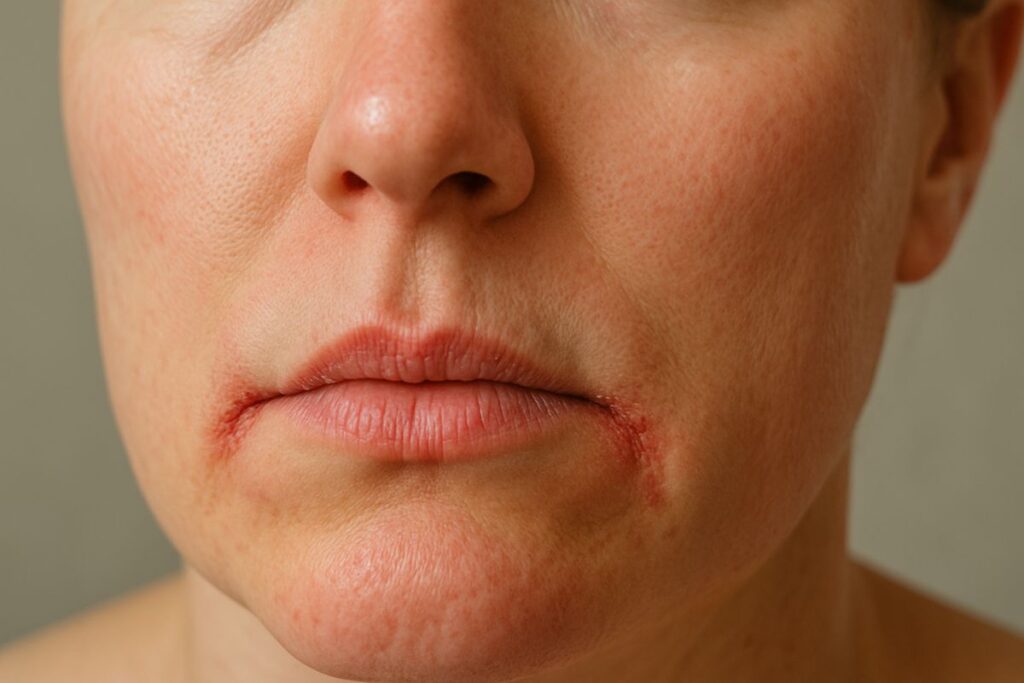
Key Takeaways
- Cracked corners of the mouth, known as angular cheilitis, can have many causes, from nutrient deficiencies to infections.
- Common nutritional culprits include iron and B vitamin deficiencies.
- Local issues like saliva pooling, dentures, or frequent lip licking often make things worse.
- Treating the condition usually requires addressing both the underlying cause and the secondary infection or irritation.
Why Cracked Corners of Your Mouth Matter
Most people think cracked lips just come from dry weather. But when the corners of your mouth split, stay sore, or keep coming back, there’s often more to the story.
Doctors call this condition angular cheilitis and while it’s not usually dangerous, it can be painful, unsightly, and a sign that something deeper is going on with your health.
Here are six of the most common causes of cracked corners of the mouth and what to do about it:
1. Nutrient Deficiencies
Your skin and oral tissues rely on vitamins and minerals for repair. A lack of nutrients weakens these tissues, making them more likely to crack.
Studies show deficiencies in iron, vitamin B2 (riboflavin), B6, folate, and B12 are linked to angular cheilitis. Iron deficiency anemia is one of the most common culprits. In some research, up to 25% of cases were tied to nutritional gaps.
Practical tip: If your mouth cracks keep coming back, ask your doctor about checking your iron and B vitamin levels. Eating more leafy greens, eggs, lean meats, and fortified cereals can help.
2. Fungal or Bacterial Infections
Once the skin cracks, it creates the perfect environment for microbes to grow. Candida (a type of yeast) and Staphylococcus bacteria are the most common offenders.
Clinical reviews note that infection is often a secondary cause, meaning cracks start for another reason and then microbes worsen them. This is why antifungal creams or antibiotic ointments are sometimes prescribed.
Practical tip: Keep the area dry, avoid licking your lips, and see a doctor if the cracks don’t heal, you may need targeted treatment.
3. Saliva Pooling and Mechanical Factors
Saliva constantly sitting at the corners of your mouth softens and irritates the skin, making it prone to breakdown. Dentures, braces, missing teeth, or frequent lip-licking can make it worse.
Dental studies highlight that ill-fitting dentures and jaw changes often lead to saliva buildup at the corners, triggering angular cheilitis in older adults.
Practical tip: If you wear dentures, ensure they fit properly. Use a protective barrier ointment like petroleum jelly at night if you drool or lick your lips often.
4. Skin Conditions
Chronic skin problems can flare up around the lips. Eczema, psoriasis, or allergic reactions to lip products can irritate the corners of the mouth.
Dermatology research shows that contact dermatitis triggered by toothpaste, lipstick, or lip balm ingredients is sometimes mistaken for angular cheilitis.
Practical tip: If your cracks worsen after using new lip products, consider switching to a hypoallergenic formula and consult a dermatologist.
5. Systemic Health Conditions
Some medical conditions increase the risk of cracked mouth corners by lowering immunity or causing malabsorption of nutrients.
Conditions such as diabetes, celiac disease, Crohn’s disease, and HIV can present with angular cheilitis. These conditions either affect nutrient absorption or increase infection risk.
Practical tip: If cracks are chronic and paired with other symptoms (fatigue, weight changes, frequent infections), it’s worth discussing broader testing with your doctor.
6. Environmental and Lifestyle Factors
Sometimes the cause is simpler: dry weather, frequent mask-wearing, or poor lip care habits can dry and irritate the corners.
Dermatology experts note that environmental triggers can set off cracks, especially in people already prone to irritation.
Practical tip: Protect your lips with a moisturizing balm, stay hydrated, and use a humidifier in very dry conditions.
Other Considerations
Not every case of cracked corners means you have a vitamin deficiency or disease. Sometimes it’s a mix: a little nutrient gap, a little drooling, plus a touch of dry weather. That’s why doctors often treat angular cheilitis with both barrier protection and a look at deeper health causes.
The Bottom Line
Cracked corners of your mouth aren’t just cosmetic. They can point to nutritional gaps, oral issues, or infections. While home care and lip balms can help temporarily, persistent cases deserve a closer look.
If the problem keeps returning, ask your healthcare provider about nutrient testing, oral health, and possible infections. Getting to the root cause is the only way to stop the cracks from coming back for good.