
Key Takeaways
- Many heart attacks in adults under 65 are not from clogged arteries.
- In women under 65, more than half of heart attacks had nontraditional causes.
- A condition called spontaneous coronary artery dissection (SCAD) was nearly six times more common in women than men.
- Heart attacks linked to stressors like anemia or infection had a higher five-year death rate.
- Truly unexplained heart attacks were rare, under 3% of cases.
A Mayo Clinic study has found that heart attacks in younger adults often happen for reasons beyond clogged arteries. The findings highlight important differences between men and women, especially for women under 65.
The study reviewed 15 years of population-based data and was published in the Journal of the American College of Cardiology. The results show that nontraditional causes of heart attacks are common, particularly in younger women, and may affect how doctors diagnose and treat patients.
The research examined causes of heart attacks in adults age 65 and younger. The goal was to better understand how often traditional plaque buildup was the reason, compared to other less recognized causes.
The study used information from the Rochester Epidemiology Project, which allowed researchers to review data over a 15-year period.
Traditional vs. Nontraditional Causes of Heart Attacks
- Across all cases, about 68% of heart attacks in people under 65 were linked to atherosclerosis, or plaque buildup in arteries.
- Among women under 65, only about 47% of heart attacks were caused by plaque buildup.
- Among men under 65, about 75% were caused by plaque buildup.
This shows a significant difference between men and women, with younger women more likely to have heart attacks from nontraditional causes.
Role of SCAD
Spontaneous coronary artery dissection, or SCAD, was highlighted as an important cause of heart attacks in younger women.
- SCAD was nearly six times more common in women compared to men in the study group.
- The condition often affects otherwise healthy women and has been misdiagnosed as plaque-based heart attack in the past.
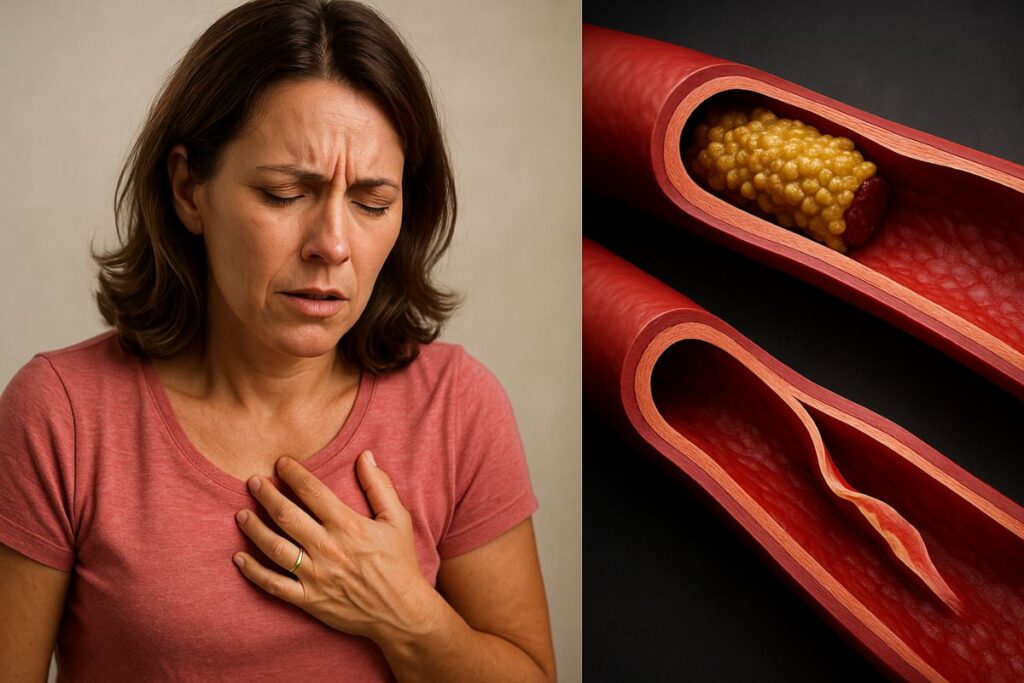
SCAD happens when a tear forms in the wall of an artery in the heart. This is a medical emergency.
The tear can reduce or block blood flow to the heart, which may trigger a heart attack, abnormal heart rhythms, or—in severe cases—sudden death.
SCAD is seen most often in women in their 40s and 50s, but it can occur in men and at younger or older ages as well. Many people affected by SCAD do not have the usual risk factors for heart disease, such as high blood pressure, high cholesterol, or diabetes.
Because SCAD can be life-threatening if not treated quickly, it is important to seek emergency care right away if you experience symptoms of a heart attack even if you believe you are not at risk.
Stressor-Triggered Heart Attacks
The study also noted heart attacks linked to stressors such as anemia or infection.
- These cases showed less heart damage during the event.
- However, the five-year death rate for these patients was about 33%, making them a high-risk group despite lower initial injury.
Rarely Unexplained
After review, fewer than 3% of cases had no identifiable cause. This suggests that most heart attacks in younger adults can be explained once the right factors are considered.
Why It Matters
The findings show that doctors cannot assume all heart attacks are caused by blocked arteries, especially in younger women. Treatment that works for plaque buildup may not be the right choice for other causes such as SCAD.
Awareness of these differences can help guide better diagnosis, treatment, and long-term care. The study also emphasizes that stressor-related heart attacks carry serious risks, even if they seem less severe at first.